
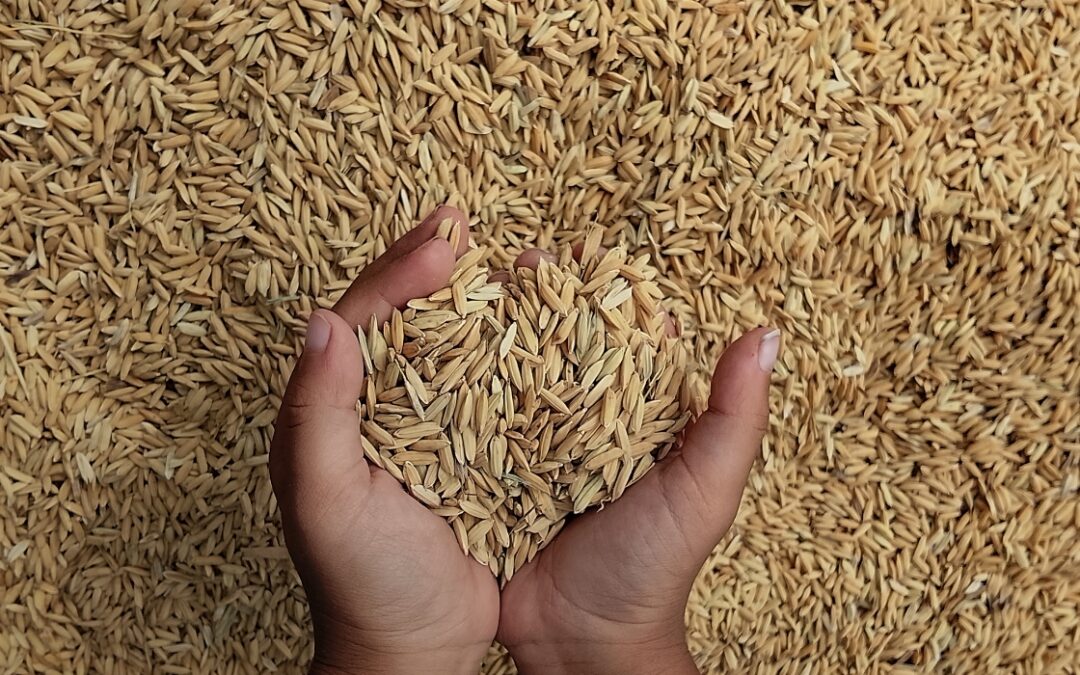
Managing grain on the farm gives you significant marketing flexibility. It allows you to wait for better prices or manage trucking delays and local bottlenecks at the terminal. However, this flexibility also puts the full weight of quality risk on your shoulders. When grain sits longer in a bin, insects and hot spots have more time to do damage. If you wait until you see bugs crawling on the surface, you have likely already lost money.
Dusta-Cide 6 is designed to be a practical, farmer-first solution for this exact scenario. It is a grain protectant, meaning it is intended to provide residual effectiveness by coating the grain as it enters storage.
The Silent Ways Stored Grain Loses Value
Insects Create Discounts and Headaches
Insects do not just eat your grain; they devalue it in multiple ways. Feeding damage leads to broken kernels and increased “fines,” which are often docked at the elevator. Contamination from insect larvae or webbing can cause further quality declines. Furthermore, insect activity generates heat and moisture. This biological activity can contribute to a rapid decline in the overall condition of the bin.
Hot Spots and Moisture Migration
Temperature swings between the outside air and the grain mass lead to moisture movement inside the bin. This often results in crusting on the surface, musty odors, and a high risk of spoilage. When insects are present, their respiration adds even more moisture to this cycle. A small pocket of out-of-condition grain can quickly spread, turning a high-quality bin into a major liability.
The Real Cost on The Farm
The financial impact shows up at delivery. Discounts for “weevily” grain or high dockage for fines can take a significant bite out of your profit margin. Beyond the check, there is the cost of extra labor, re-handling spoiled grain, and the loss of marketing opportunities if you are forced to sell grain before you are ready.
Why Dusta-Cide 6 is Built for Stored-Grain Environments
Dusta-Cide 6 is an insecticide dust formulation specifically designed for stored-grain handling. It is not a “restricted use pesticide,” which makes it an easily accessible tool for many farm operations. Farmers often prefer the dust formulation because it is easy to apply without specialized liquid spray equipment.
As you load wheat, corn, barley, rye or oats into the bin, the dust is poured so it flows into the auger. This allows it to be distributed throughout the mass of grain. It is most effective when it comes into direct contact with as many kernels as possible. It is important to remember that Dusta-Cide 6 is not a replacement for aeration or sanitation; rather, it is a force multiplier for a good management plan. Always follow label directions and PPE requirements for your area.
The 3 Moments When Dusta-Cide 6 Can Make The Biggest Difference
1) Before you fill the bin
Start clean to protect the places where insects come from. Insects often hide in the cracks and crevices of empty bins or in the handling equipment used during the previous season. Pair thorough sanitation with a labeled dust application in approved areas. Focusing on empty bin surfaces and transitions can help reduce the odds of “carryover” insects becoming a bin-wide issue later in the summer.
2) During fill and handling
Augers, pits, and conveyors are the transfer points that can spread insects quickly. By adding Dusta-Cide 6 during the fill, you ensure that the protectant is mixed thoroughly as the grain moves. This helps reduce insect pressure in the very places where fines and dust accumulate, which are the areas insects find most attractive.
3) During storage
If you wait until you see an infestation, you are reacting to a problem that has already started. Applying a protectant during the loading process supports a prevention mindset. It buys you time to store the grain longer, allowing for better market timing while the residual insecticide works to keep the population from establishing.
A Farmer’s Simple Stored-Grain Plan
Before Grain Transfer into Bin
Step 1: CLEAN
Remove any dunnage from around the bin, and mow any grass or weeds surrounding the storage bin. Spray a residual pesticide around the perimeter of the bin at the base level, making sure that the spray hits both the bin and the foundation base. Remove any grain or debris that is present inside of the storage facility, then sweep the floor.
Step 2: FOG EMPTY BIN
For a fast knockdown of any residual pests in the empty bin, fog the empty bin with Vapo-Cide. Re-entry is allowed after 24 hours. Read and understand the label thoroughly before use; a licensed applicator is recommended for most effective fogging results.
During Grain Transfer and Storage
Step 3: PROTECT
For residual protection to healthy stored crops for up to 120 days, read and understand the label for Dusta-Cide. Add Dusta-Cide to the grain stream as it is being transferred into the bin. For best results, add into the boot of the auger so that a good mix is in the commodity.
Step 4: FUMIGATE
Routinely check grain for any infestation. If infestation appears, prepare the bin to be fumigated with PH3 Aluminum Phosphide Fumigant. Read and understand the label and labeling for PH3; a licensed applicator is recommended for most effective fumigation results. Seal all openings including spouts and/or conveying equipment used to fill the bin. Fumigate with PH3. Leave under fumigation for 7 to 10 days.
Do This / Not That
| Do This | Not That |
| Clean the bin thoroughly before filling | Ignore fines and old grain inside and immediately surrounding bin |
| Treat with a protectant as a preventative measure | Wait for visible insects before taking action |
| Monitor temperature trends regularly | Skip recordkeeping or application dates |
| Follow all labeling and instructions when applying pesticides | Guess on application rates or PPE |
Buying Guide: Is Dusta-Cide 6 a Good Fit for Your Farm?
Best Fit Scenarios
- You intend to store grain beyond a short-term holding period.
- You have dealt with insect discounts in the past.
- You want a repeatable prevention routine that fits into your existing harvest flow.
Not a Fit / Needs Pro Input
- You suspect a major infestation is already present in the bin.
- You are dealing with grain that is already significantly out of condition.
- You are unsure about insect identification or specific compliance requirements.
When to Act Immediately
Certain signs require a call for help or immediate grain movement. A rapid rise in temperature usually indicates a hot spot. Musty odors or visible mold suggest the grain is spoiling. If you find live insects in multiple samples, the infestation has likely passed the point where a protectant alone can solve the problem. Also, watch for bridging or flow problems during unload, as this can be a sign of advanced spoilage or webbing.
FAQ
What does Dusta-Cide 6 help prevent?
It helps prevent insect-related damage that leads to dockage and quality loss at the elevator.
Where is it typically used?
It is used in stored-grain environments and handling areas where the label permits. It is primarily used for wheat storage, but can also be used on corn, barley, rye and oats.
Can I rely on Dusta-Cide 6 alone?
No. The best results come from a combination of sanitation, moisture control, aeration, monitoring and correct usage of the protectant.
What is the first step if I want to use it?
Review the label directions and talk with Douglas ProTech to match the plan to your specific bins and storage timeline.
Contact DouglasProtech
On-farm storage is a powerful profit tool, but it requires a solid prevention plan to be successful. Protecting your paycheck means protecting your grain from the moment it leaves the field. Dusta-Cide 6 offers a straightforward way to coat and protect your harvest for the long haul.
Talk to Douglas ProTech about Dusta-Cide 6 for your bins today.