
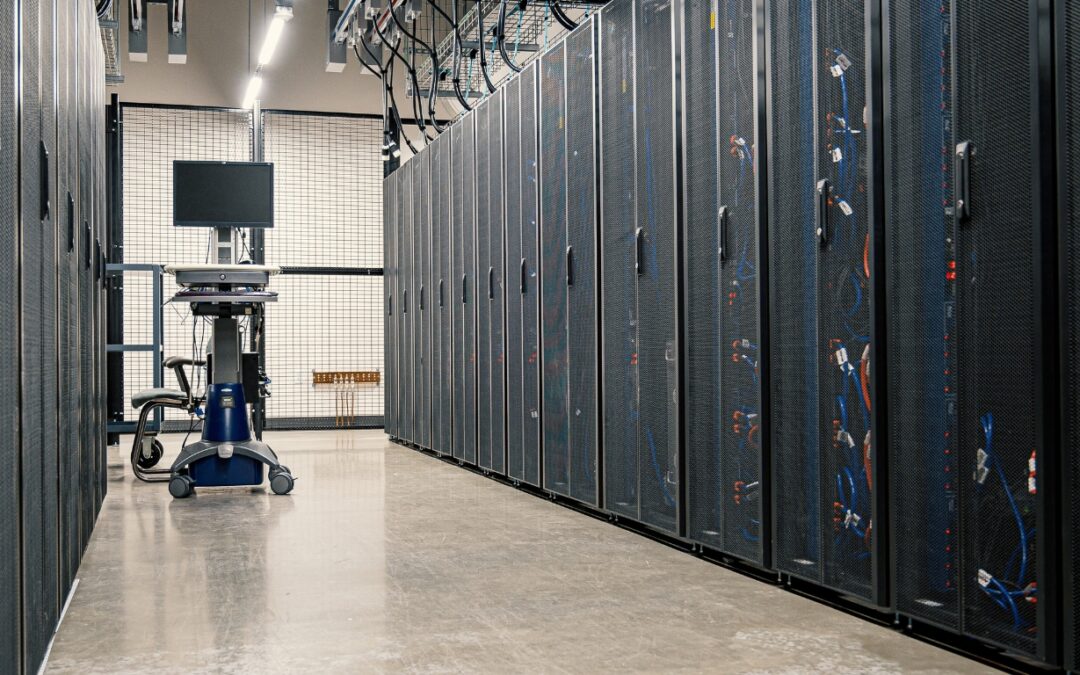
The demand for computational power is accelerating at an unprecedented rate, driven by AI, machine learning, and global cloud infrastructure. This growth necessitates massive expansion; for instance, industry leaders like Google continue to announce plans for new, hyper-scale data centers capable of handling colossal loads.
However, every computation generates heat, making thermal management in IT infrastructure the single most critical challenge. It is also often the largest operational cost for modern facilities. As server densities soar, traditional air-cooling methods are hitting a thermal wall. Glycol-based thermal fluids represent the leap forward the industry needs, offering a solution that is more efficient, more sustainable, and inherently safer for the next generation of computing.
The Cooling Challenge in Modern Data Centers
Today’s computing is defined by high-performance hardware, particularly GPUs and high-core-count CPUs, packed into dense racks. This creates thermal density spikes far exceeding what conventional cooling systems were designed for.
Air-cooling systems struggle to handle rack densities beyond 20kW. As loads move toward 50kW, 75kW, and even 100kW per rack, air simply cannot absorb and transport heat fast enough. This forces cooling systems to operate outside their optimal range, leading to tremendous energy waste and high operational costs. The thermodynamic limitations of air, its relatively low density and specific heat capacity, mean enormous volumes must be moved to achieve even moderate cooling, consuming huge amounts of fan power. This challenge is compounded by the high resistance to airflow caused by densely packed server components.
Inadequate cooling creates localized hot spots, which trigger performance throttling, leading to reduced computational output and accelerating equipment failure. Cooling issues are a leading cause of unplanned downtime, which can cost data centers thousands of dollars per minute. The goal is no longer just cooling the air in the room, but efficiently removing heat directly from the chip. This shift is mandatory for facilities aiming for a Power Usage Effectiveness (PUE) close to the ideal of 1.0, and it necessitates a transition to liquid solutions capable of extracting heat closer to the source.
What Are Glycol-Based Thermal Fluids?
Glycol-based thermal fluids are specialized, inhibited liquids designed for superior heat transfer. They consist of a mixture of glycol (most commonly Propylene Glycol coolant for its non-toxic, safe properties in and around electronics) and purified water, combined with highly effective corrosion inhibitor packages.
Unlike simple water, these engineered fluids offer key advantages:
- Freeze Protection: They prevent the cooling fluid from freezing in dry coolers or outdoor piping loops, a critical necessity for maintaining infrastructure resilience in cold climates. The freezing point depression provided by the glycol component safeguards vulnerable external heat rejection equipment.
- Corrosion Resistance: The inhibitors protect the complex network of copper, steel, and aluminum components found in liquid cooling for data centers from rust and scale, ensuring the longevity and health of the system. This protection is vital because even trace amounts of metal degradation can lead to fouling and blockage of the microscopic channels used in cold plates and chillers.
- Stable Thermal Properties: They maintain thermal stability across a wide temperature range, ensuring reliable performance even with fluctuating compute loads. This stability is crucial for ensuring the fluid does not break down or become corrosive when exposed to the high temperatures generated by modern server chips.
- Engineered for Delicate Balance: maximizing heat transfer efficiency while maintaining safety, low viscosity, and long-term corrosion protection. Propylene glycol, in particular, is preferred in many data center environments due to its non-toxic classification, minimizing environmental and safety hazards in the event of a leak near personnel or sensitive equipment.
How Glycol-Based Thermal Fluids Enable Efficient Data Center Cooling
The adoption of glycol-based thermal fluid solutions is central to enabling advanced data center cooling solutions like Direct-to-Chip (D2C) and rear-door heat exchangers.
- Superior Heat Transfer: Liquid-to-chip cooling can remove up to 3,000 times more heat than air at the same volume. The fluid is routed through cold plates mounted directly onto the CPUs and GPUs, capturing heat right at the source with minimal thermal resistance. This process drastically shrinks the thermal footprint within the rack. The high specific heat and thermal conductivity of the fluid mixture allow it to absorb and transport large amounts of energy quickly and efficiently away from the heat-generating components.
- Consistent Temperature Control: Glycol-based fluids allow for much higher and more stable operating temperatures within the cooling loop. This consistency is vital for maintaining the performance and reliability of high-density racks. Furthermore, liquid cooling drastically reduces temperature fluctuations across the component surface, which helps extend the operational lifespan of the chips by minimizing thermal cycling stress.
- Safe for Sensitive Electronics: Propylene glycol-based solutions are non-toxic and have a favorable safety profile. While the fluid must remain contained, it is designed to be compatible with common system materials, mitigating the risk posed by potential leaks in a critical IT environment. Many systems utilize non-conductive versions of these fluids for even greater protection against shorts in the rare event of a breach.
- Enable Modular/Scalable Infrastructure: Liquid cooling systems based on glycol require less physical space than the vast air handling units they replace. This allows operators to build modular/scalable infrastructure, adding cooling capacity precisely where it’s needed without overhauling the entire facility. Cooling Distribution Units (CDUs) and heat rejection systems can be scaled vertically, freeing up valuable white space for more revenue-generating IT racks. This agility is key for hyperscalers who must rapidly expand capacity.
The ability of these fluids to operate efficiently in warm water cooling systems is another major advantage. By safely running the fluid at higher temperatures, data centers can dramatically increase their reliance on ambient air or economizer modes, further reducing the need for costly and power-intensive compressors and chillers.
Key Benefits for Data Center Operators
The strategic shift to glycol-based liquid cooling delivers measurable improvements to a data center’s bottom line and sustainability profile.
- Energy Efficiency (Lower PUE): The high efficiency of liquid-to-chip heat removal drastically reduces the load on traditional Computer Room Air Conditioners (CRACs) and chillers. This translates directly to a lower Power Usage Effectiveness (PUE), meaning more power is used for computing and less for cooling. A PUE reduction from 1.5 to 1.2, which is achievable with liquid cooling, represents a significant saving in electricity costs. Critically, the efficiency savings far outweigh the initial price point for effective thermal fluids, making it a key long-term benefit.
- Reduced Risk of Hotspots and Shutdowns: By precisely managing the temperature of individual components, the risk of localized overheating is virtually eliminated, guaranteeing continuous uptime and better performance. This stability allows servers to run at maximum clock speeds reliably, maximizing return on hardware investment.
- Sustainability and Carbon Reduction: Optimized liquid cooling reduces total energy consumption and, in many cases, allows facilities to utilize “free cooling” (using external ambient air or water to cool the fluid) for more months of the year, supporting sustainable data center operations and a lower carbon footprint. Furthermore, the high-grade heat captured by the fluid can often be recovered and reused for facility heating or district heating schemes, achieving near-zero waste operations.
- Scalability for Future Growth: Liquid cooling is the most effective solution for handling the inevitable increases in density. This forward-thinking approach ensures facility investments remain viable as chip power continues to climb. By planning fluid loops today, operators are insulating themselves against the expensive and complex cooling retrofits of tomorrow.
- Lower Operational Noise: Replacing massive air conditioning units and thousands of high-speed server fans with fluid circulation pumps dramatically reduces the facility’s overall operational noise, improving the working environment for technicians.
Glycol-Based Fluids in Action: Use Cases
The flexibility and performance of glycol-based thermal fluids make them the perfect fit for the most demanding applications in IT infrastructure:
- Liquid-Cooled Server Racks: Used in secondary loops to deliver chilled fluid to rear-door heat exchangers or D2C cold plates in high-density areas. The fluid acts as the intermediary between the high-heat components and the facility’s main cooling infrastructure.
- High-Performance Computing (HPC) Clusters: These systems, vital for research and AI training, require immediate, constant heat removal that only liquid can provide. HPC facilities were among the first to widely adopt glycol-based liquid cooling due to their extreme thermal demands.
- Immersion and Direct-to-Chip Cooling: In two-phase or single-phase immersion systems, glycol-based fluids or specialized dielectric coolants are used to entirely submerge electronic components. In D2C systems, the fluid is pumped directly to a cold plate on the hottest chip, offering the most direct and efficient heat removal possible.
- Edge Data Centers, Challenging Environments: Smaller, remote, or modular data centers require compact, resilient cooling solutions that can withstand environmental fluctuations, making glycol’s freeze protection essential. Since these facilities often lack continuous on-site staff, the reliability and low-maintenance requirements of closed-loop glycol systems are a major advantage.
Future-Proofing Data Centers with Advanced Cooling
The relentless pace of innovation in AI, cloud, and IoT ensures that server densities will continue to increase. Advanced cooling technology for data centers is no longer a niche solution, it is the standard requirement for future operations. Chip manufacturers are designing hardware with the explicit expectation of liquid cooling, accelerating the need for adoption. By adopting glycol-based fluids and supporting liquid cooling infrastructure, data center leaders are not just managing current heat; they are future-proofing their assets, preparing for new regulatory and sustainability standards, and ensuring their facilities are ready to handle the next technological leap, particularly as global climate and environmental expectations tighten. This commitment to advanced thermal management is a prerequisite for achieving future-ready status in the digital economy.
Contact Douglas ProTech
The evolution of computing demands an evolution in cooling. Glycol-based thermal fluids are the most effective, safe, and sustainable medium for high-density, high-performance computing cooling. Their proven stability, anti-corrosion properties, and superior heat transfer capabilities address the core limitations of air-based systems, enabling operators to handle current loads while providing ample headroom for future growth. By integrating these advanced fluids into liquid cooling systems, data center operators can achieve radical gains in energy efficiency, minimize operational risk, and establish a foundation for reliable, profitable growth.
Contact Douglas ProTech today for technical guidance and more information about how our tailored glycol-based thermal fluid solutions can optimize your data center’s cooling strategy.