
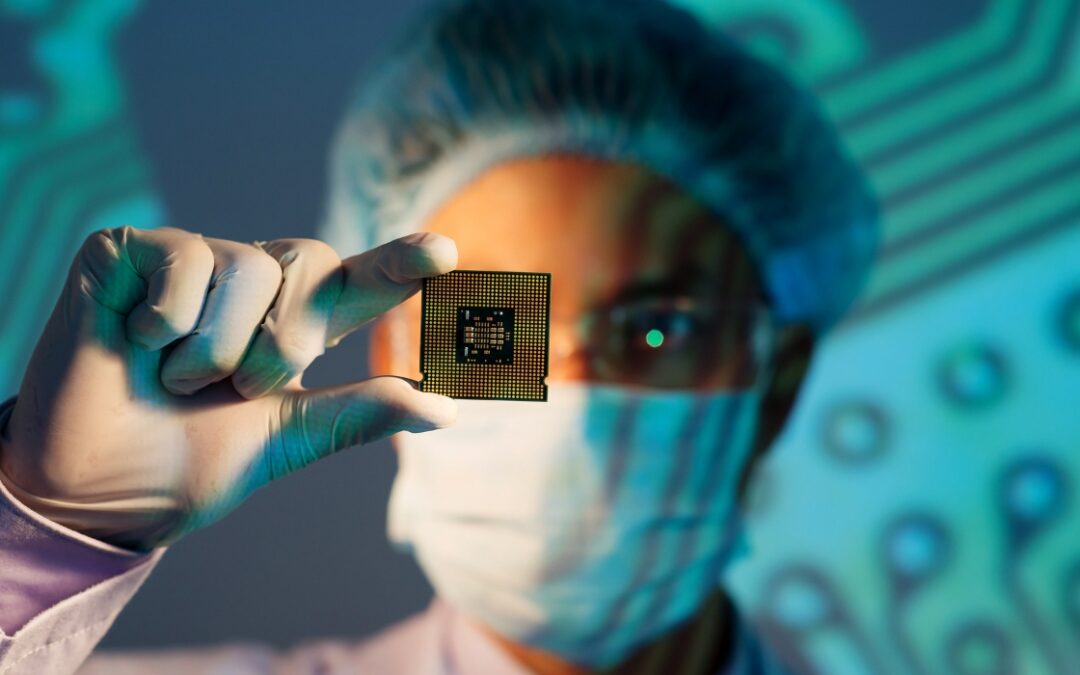
The rapid rise of semiconductor manufacturing has fundamentally reshaped modern technology. From the smartphone in your pocket to the complex artificial intelligence systems powering global data centers, semiconductor chips are the invisible engines of the digital age. However, producing these microscopic wonders is an exercise in extreme precision. As circuits shrink to the nanometer scale, the margin for error disappears. One of the most critical, yet often overlooked, factors in successful chip production is thermal management. High-purity thermal fluids and advanced cooling systems are not just supporting utilities; they are essential components of the fabrication process that ensure reliability, prevent defects, and protect the massive investments required for high-volume manufacturing.
What Are Semiconductors?
At its simplest, a semiconductor is a material, most commonly silicon, that has electrical conductivity between that of a conductor (like copper) and an insulator (like glass). This unique property allows engineers to control the flow of electricity with extreme precision.
By utilizing silicon with other elements, manufacturers can create transistors that act as tiny on-off switches. When millions or billions of these transistors are etched onto a single silicon wafer, they form an integrated circuit. These devices are the foundational building blocks of all modern electronics, enabling the logic, memory, and power management that define our technological landscape.
Types of Semiconductor Chips
The semiconductor industry produces a diverse array of chips, each serving a specialized function.
Microprocessors (CPUs): Often referred to as the brain of a device, the Central Processing Unit handles the primary logic, arithmetic, and control instructions for computers, servers, and smartphones. Modern CPUs contain billions of transistors in a space the size of a fingernail, requiring incredible precision during fabrication to ensure every microscopic gate functions at clock speeds measured in gigahertz.
Memory Chips: These are essential for storing and retrieving data. They include DRAM (Dynamic Random Access Memory), which provides the high-speed workspace for active applications, and NAND Flash memory, used for long-term storage in SSDs and mobile devices. Fabricating memory chips involves stacking hundreds of layers of circuits vertically (3D NAND), a process that demands absolute temperature uniformity across the entire wafer to ensure layer alignment.
Power Management ICs (PMICs): These specialized chips are the gatekeepers of energy. They regulate voltage and manage the distribution of power across a device’s motherboard. By ensuring that sensitive components receive exactly the correct energy levels, PMICs prevent internal components from overheating and extend battery life. Their manufacturing involves specialized materials capable of handling higher currents and voltages.
Analog Chips: Unlike digital chips that process 1s and 0s, analog chips process real-world continuous signals, such as sound, temperature, light, and radio waves. They are responsible for signal processing and conversion (Analog-to-Digital). These chips are essential for everything from high-fidelity audio equipment to the sensors in autonomous vehicles.
Application-Specific Integrated Circuits (ASICs): As the name implies, ASICs are custom-designed for a single, specific task rather than general-purpose computing. Because they are optimized for one function, such as bitcoin mining, high-speed network routing, or specialized medical imaging, they are exceptionally efficient. Their design and fabrication are often more complex and expensive, making yield protection critical.
Graphics Processing Units (GPUs): While originally designed for graphics rendering in gaming, GPUs have become the backbone of modern AI model training. They utilize parallel processing to handle thousands of data threads simultaneously. Because of their massive computational density, the fabrication of GPUs pushes the limits of thermal management, requiring high-purity fluids to cool the equipment during the intensive plasma etching required to create their intricate architectures.
Why Semiconductor Chips Matter
Semiconductor chips are the foundation of modern digital infrastructure. They are the primary drivers of innovation in every sector, from healthcare and automotive safety to global connectivity and aerospace. Because they are integrated into almost every facet of life, a disruption in semiconductor manufacturing can paralyze global supply chains and stall economic growth. Strategically, the ability to manufacture these chips at scale is a hallmark of technological leadership and national security.
The Chip Fabrication Process
Creating a semiconductor chip is a multi-month process involving hundreds of steps within a “fab”, a highly controlled cleanroom environment.
Key Processes in Wafer Processing:
Plasma Etching: During this stage, high-energy plasma is used to remove layers of material from the wafer surface to create the desired circuit patterns. This process generates intense, localized heat that must be removed instantly to prevent damage to the delicate silicon structures.
Chemical Vapor Deposition (CVD): This process involves depositing thin films of material onto the wafer by inducing chemical reactions in a vacuum chamber. CVD often requires high temperatures to facilitate the reaction, but the surrounding hardware must be kept at a stable, lower temperature to ensure film uniformity.
The need for controlled environments is absolute. Even a temperature fluctuation of a single degree during these stages can cause the material to expand or contract, resulting in misaligned circuits and ruined wafers.
The Role of Thermal Fluids in Semiconductor Manufacturing
Precise temperature control is essential because the chemical and physical reactions used to build chips are temperature-dependent. This is where thermal fluids become the essential aspects of the fab.
Industrial chillers circulate high-purity thermal fluids through heat exchangers directly connected to the processing equipment. During plasma etching, these fluids absorb the thermal energy generated by the plasma, maintaining the wafer at a constant temperature. In CVD, the fluids regulate the temperature of the chamber walls to prevent unwanted deposition.
The primary goal of this cooling is defect prevention. If the temperature is not maintained perfectly, microscopic defects, such as cracks, warped wafers, or chemical impurities, can compromise an entire batch of chips. Given that a single silicon wafer can hold thousands of individual chips, a failure in cooling can result in the loss of millions of dollars in potential revenue.
Industrial Chillers and High-Purity Fluids: How They Work
Industrial-scale chillers used in semiconductor manufacturing are highly specialized pieces of equipment. They must provide constant, vibration-free cooling with sub-degree accuracy.
A critical requirement in this industry is the use of high-purity fluids. Standard industrial coolants may contain ions or particulates that can cause electrical interference or contamination if they ever come into contact with the fabrication environment. High-purity thermal fluids are engineered to be chemically inert and extremely clean, minimizing any risk to the fabrication process.
Douglas ProTech solutions support this industry by providing the technical expertise required to select and maintain these high-performance fluids. Our solutions ensure that the cooling loops remain free of corrosion and contaminants, maximizing both the efficiency of the chillers and the uptime of the fabrication equipment.
The Cost of Failure: Defect Prevention and Yield Protection
In the semiconductor world, yield is the percentage of functional chips produced on a single wafer compared to the maximum possible. Inadequate cooling is a primary enemy of high yield.
Yield Loss: If temperature control fails during etching or deposition, the circuits may not form correctly, rendering the chips useless.
Production Downtime: A failure in the cooling system can bring an entire production line to a halt, costing the manufacturer hundreds of thousands of dollars per hour.
Equipment Damage: High-performance fab equipment is incredibly expensive. Proper thermal management protects these assets from the stress of extreme heat cycles.
Proactive cooling and fluid management are the best defenses for protecting multi-million-dollar production runs.
Contact Douglas ProTech
The complexity of semiconductor manufacturing continues to grow as chips become more powerful and smaller. Throughout this evolution, the critical role of thermal fluids and advanced cooling remains constant. Precision cooling is the silent partner of innovation, ensuring that the chips powering our world are produced with the highest possible reliability and yield.
Douglas ProTech is committed to supporting the semiconductor industry with advanced thermal management solutions that meet the rigorous demands of modern fabrication.
Contact Douglas ProTech today to learn more about our reliable, high-performance thermal management solutions and how we can support your semiconductor manufacturing goals.